
解决ecshop后台搜索引擎的关键字统计乱码问题
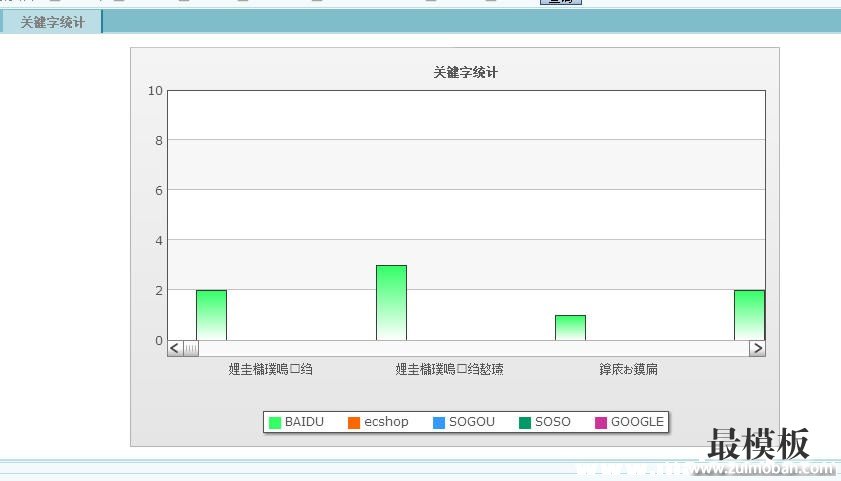
这个问题是ecshop收录的搜索引擎的情况。在ecshop中将搜索引擎关键字写入数据库的函数在includes/lib_main.php中,写入函数为save_searchengine_keyword。
 引用内容
引用内容
function save_searchengine_keyword($domain, $path)
{
if (strpos($domain, ‘google.com.tw’) !== false && preg_match(‘/q=([^&]*)/i’, $path, $regs))
{
$searchengine = ‘GOOGLE TAIWAN’;
$keywords = urldecode($regs[1]); // google taiwan
}
if (strpos($domain, ‘google.cn’) !== false && preg_match(‘/q=([^&]*)/i’, $path, $regs))
{
$searchengine = ‘GOOGLE CHINA’;
$keywords = urldecode($regs[1]); // google china
}
if (strpos($domain, ‘google.com’) !== false && preg_match(‘/q=([^&]*)/i’, $path, $regs))
{
$searchengine = ‘GOOGLE’;
$keywords = urldecode($regs[1]); // google
}
elseif (strpos($domain, ‘baidu.’) !== false && preg_match(‘/wd=([^&]*)/i’, $path, $regs))
{
$searchengine = ‘BAIDU’;
$keywords = urldecode($regs[1]); // baidu
}
elseif (strpos($domain, ‘baidu.’) !== false && preg_match(‘/word=([^&]*)/i’, $path, $regs))
{
$searchengine = ‘BAIDU’;
$keywords = urldecode($regs[1]); // baidu
}
elseif (strpos($domain, ‘114.vnet.cn’) !== false && preg_match(‘/kw=([^&]*)/i’, $path, $regs))
{
$searchengine = ‘CT114’;
$keywords = urldecode($regs[1]); // ct114
}
elseif (strpos($domain, ‘iask.com’) !== false && preg_match(‘/k=([^&]*)/i’, $path, $regs))
{
$searchengine = ‘IASK’;
$keywords = urldecode($regs[1]); // iask
}
elseif (strpos($domain, ‘soso.com’) !== false && preg_match(‘/w=([^&]*)/i’, $path, $regs))
{
$searchengine = ‘SOSO’;
$keywords = urldecode($regs[1]); // soso
}
elseif (strpos($domain, ‘sogou.com’) !== false && preg_match(‘/query=([^&]*)/i’, $path, $regs))
{
$searchengine = ‘SOGOU’;
$keywords = urldecode($regs[1]); // sogou
}
elseif (strpos($domain, ‘so.163.com’) !== false && preg_match(‘/q=([^&]*)/i’, $path, $regs))
{
$searchengine = ‘NETEASE’;
$keywords = urldecode($regs[1]); // netease
}
elseif (strpos($domain, ‘yodao.com’) !== false && preg_match(‘/q=([^&]*)/i’, $path, $regs))
{
$searchengine = ‘YODAO’;
$keywords = urldecode($regs[1]); // yodao
}
elseif (strpos($domain, ‘zhongsou.com’) !== false && preg_match(‘/word=([^&]*)/i’, $path, $regs))
{
$searchengine = ‘ZHONGSOU’;
$keywords = urldecode($regs[1]); // zhongsou
}
elseif (strpos($domain, ‘search.tom.com’) !== false && preg_match(‘/w=([^&]*)/i’, $path, $regs))
{
$searchengine = ‘TOM’;
$keywords = urldecode($regs[1]); // tom
}
elseif (strpos($domain, ‘live.com’) !== false && preg_match(‘/q=([^&]*)/i’, $path, $regs))
{
$searchengine = ‘MSLIVE’;
$keywords = urldecode($regs[1]); // MSLIVE
}
elseif (strpos($domain, ‘tw.search.yahoo.com’) !== false && preg_match(‘/p=([^&]*)/i’, $path, $regs))
{
$searchengine = ‘YAHOO TAIWAN’;
$keywords = urldecode($regs[1]); // yahoo taiwan
}
elseif (strpos($domain, ‘cn.yahoo.’) !== false && preg_match(‘/p=([^&]*)/i’, $path, $regs))
{
$searchengine = ‘YAHOO CHINA’;
$keywords = urldecode($regs[1]); // yahoo china
}
elseif (strpos($domain, ‘yahoo.’) !== false && preg_match(‘/p=([^&]*)/i’, $path, $regs))
{
$searchengine = ‘YAHOO’;
$keywords = urldecode($regs[1]); // yahoo
}
elseif (strpos($domain, ‘msn.com.tw’) !== false && preg_match(‘/q=([^&]*)/i’, $path, $regs))
{
$searchengine = ‘MSN TAIWAN’;
$keywords = urldecode($regs[1]); // msn taiwan
}
elseif (strpos($domain, ‘msn.com.cn’) !== false && preg_match(‘/q=([^&]*)/i’, $path, $regs))
{
$searchengine = ‘MSN CHINA’;
$keywords = urldecode($regs[1]); // msn china
}
elseif (strpos($domain, ‘msn.com’) !== false && preg_match(‘/q=([^&]*)/i’, $path, $regs))
{
$searchengine = ‘MSN’;
$keywords = urldecode($regs[1]); // msn
}
if (!empty($keywords))
{
$gb_search = array(‘YAHOO CHINA’, ‘TOM’, ‘ZHONGSOU’, ‘NETEASE’, ‘SOGOU’, ‘SOSO’, ‘IASK’, ‘CT114’, ‘BAIDU’);
if (EC_CHARSET == ‘utf-8’ && in_array($searchengine, $gb_search))
{
$keywords = ecs_iconv(‘GBK’, ‘UTF8’, $keywords);
}
if (EC_CHARSET == ‘gbk’ && !in_array($searchengine, $gb_search))
{
$keywords = ecs_iconv(‘UTF8’, ‘GBK’, $keywords);
}
$GLOBALS[‘db’]->autoReplace($GLOBALS[‘ecs’]->table(‘keywords’), array(‘date’ => local_date(‘Y-m-d’), ‘searchengine’ => $searchengine, ‘keyword’ => addslashes($keywords), ‘count’ => 1), array(‘count’ => 1));
}
}
可以看到这个函数中其实是有转码,他是先判断EC_CHARSET的编码,如果是gbk,则将UTF8数据专为GBK,很明显我的系统是GBK,这个没有问题,那么问题可能就在ecs_iconv函数。ecs_iconv函数在includes/lib_base.php文件中。
引用内容
function ecs_iconv($source_lang, $target_lang, $source_string = ”)
{
static $chs = NULL;
/* 如果字符串为空或者字符串不需要转换,直接返回 */
if ($source_lang == $target_lang || $source_string == ” || preg_match(“/[\x80-\xFF]+/”, $source_string) == 0)
{
return $source_string;
}
if ($chs === NULL)
{
require_once(ROOT_PATH . ‘includes/cls_iconv.php’);
$chs = new Chinese(ROOT_PATH);
}
return $chs->Convert($source_lang, $target_lang, $source_string);
}
看了一下,没看出什么问题。’includes/cls_iconv.php是ECSHOP 字符集转换类,也没啥问题。于是决定跑去数据库看看keywords表,看看是什么情况。
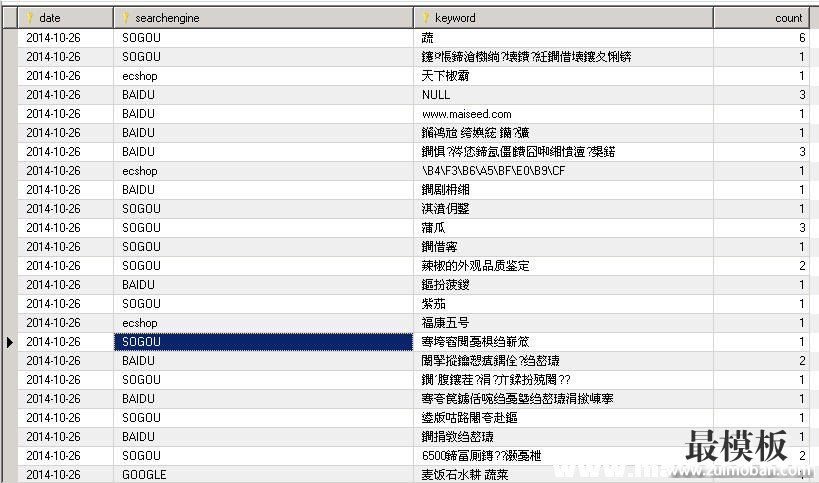
个人觉得比较诡异,他里面的数据即不全是乱码,也不全是明码。但是说明一点,ecs_iconv这个函数没有问题,一个可能的情况是save_searchengine_keyword函数的问题,他可能有时候认为EC_CHARSET是UTF8,所以就没有转码,这是我们得到的就是乱码数据,而认为是GBK时就进行转码,这时候就得到正确数据,不管怎样可以从这里试试,就GBK系统来说,直接去掉判断得了,管他什么编码都进行编码,这样如果数据正确那就说明是这里的问题。
把 $keywords = ecs_iconv(‘UTF8’, ‘GBK’, $keywords);复制出来放一个在
引用内容 if (EC_CHARSET == ‘utf-8’ && in_array($searchengine, $gb_search))
{
$keywords = ecs_iconv(‘GBK’, ‘UTF8’, $keywords);
}
if (EC_CHARSET == ‘gbk’ && !in_array($searchengine, $gb_search))
{
$keywords = ecs_iconv(‘UTF8’, ‘GBK’, $keywords);
}
后面,就成了
引用内容 if (EC_CHARSET == ‘utf-8’ && in_array($searchengine, $gb_search))
{
$keywords = ecs_iconv(‘GBK’, ‘UTF8’, $keywords);
}
if (EC_CHARSET == ‘gbk’ && !in_array($searchengine, $gb_search))
{
$keywords = ecs_iconv(‘UTF8’, ‘GBK’, $keywords);
}
$keywords = ecs_iconv(‘UTF8’, ‘GBK’, $keywords);
这样管他什么编码,一律转GBK,如果数据库中数据正确,那就说明是这个问题。好了,这个要搜索引擎帮忙才能找出问题,先等等看.

